March 2026
By Linai Green, 12th Grade
Editor’s note: This article was chosen by the editorial staff as the best opinion piece written for The Cardinal Post’s First Annual Op-Ed Contest.
Ignorance is bliss. What you don’t know can’t hurt you, right? So, instead of worrying about the bigger picture or what is happening around us, we should just focus on ourselves. That way, we can stay happy and comfortable.
However, there is one thing we should question: “If ignorance is bliss, why aren’t more people happy?” This query, posed by Thomas Jefferson, reveals that a lack of knowledge is not what makes us happy. In fact, it is what keeps us from happiness, because it prevents us from truly improving our society.
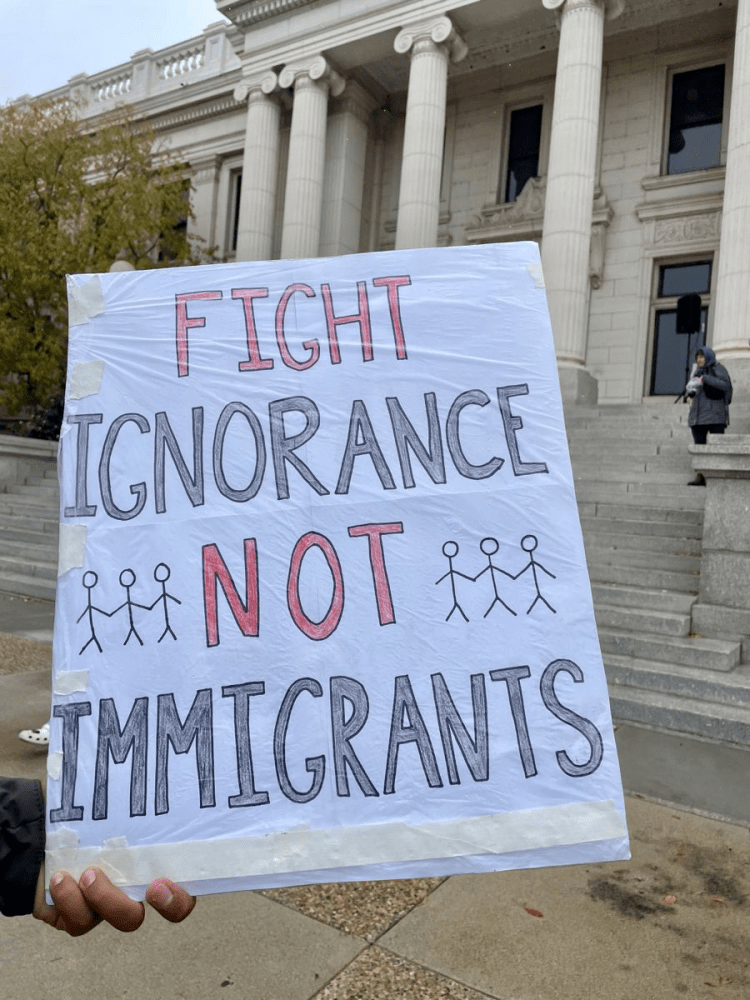
America exploits our unquestioning, malleable mentality. It fosters a false sense of peace that we blindly accept through methods such as media censorship, smokescreens and distractions, AI influence, and weakened education. Through these tactics, the population is prevented from engaging in discussions that reveal the troubling state of our government. Without these discussions, change cannot occur. People cannot take action to protect the hundreds of thousands who suffer from violence and systemic neglect.
It is important to acknowledge how much media we consume daily through platforms such as TikTok, Twitter (X), and Facebook. These platforms have become primary sources of information. The issue is that they are American companies, and their owners, Larry Ellison, Elon Musk, Mark Zuckerberg, etc., can regulate and manipulate algorithms to censor information they don’t want citizens to see. While moderation may be necessary in some cases, these algorithms suppress vital information. These individuals also wield significant political influence, favoring certain parties. Through social media, misinformation can spread while criticism of the government is limited, even when such criticism is necessary.
I have experienced this firsthand while using TikTok. Since Oracle became the app’s owner, videos criticizing Trump or speculating about government corruption appear less visible. Comments on similar content are sometimes hidden behind “sensitive content” screens, discouraging users from engaging with perspectives that may not align with the platform’s leadership.
Another way social media fosters ignorance is through distraction. There is always a new controversy to pull attention away from deeper issues. For example, amid serious political debates surrounding immigration policies, ICE actions, and the release of the Epstein files, much of the trending content focuses instead on spectacle. For example, the trending everyday headlines include highlights like “There is going to be a half-time show by Turning Point to watch instead of the Bad Bunny performance” or “Donald Trump posted a racist meme towards former president Barack Obama.” While these moments generate conversation, they overshadow discussions that demand critical thought.
Additionally, the “memeification” of serious issues further deepens ignorance. On social media, there is a strong culture of using humor to address serious situations and make people feel comfortable. Over time, this has made us so desensitized and numb to topics that deserve further discussion. It also disrespects those directly affected by these events, reducing their experiences to jokes. When disturbing information, such as details connected to the Epstein files, becomes meme material, it sends the message that society is indifferent. And those who recognize the severity of these revelations are drowned out by the people who are “memeifying” these topics.
The American education system must also be considered. While the United States is often regarded as highly educated, recent years have shown signs of decline. Test scores in core subjects like math and science have dropped, and literacy rates are suffering as short-form content replaces sustained reading. At the same time, legislation in several states, especially red states, restricts how history is taught. When subjects like slavery, the Civil War, and systemic racism are limited or softened, students are denied critical historical context. This creates adults who fail to recognize patterns when history begins to repeat itself.
In examining educational decline, we must also acknowledge the role of AI. As AI tools become more accessible, students and even teachers increasingly use them to cheat and complete assignments for them. Beyond academics, many people now rely on AI as a primary source of information. As individuals form attachments to tools like ChatGPT or Gemini and become “friends” with them, an increasing share of public knowledge is filtered. This presents a risk; AI can be, and is, extremely biased in favor of its creator. When people accept AI-generated responses without scrutiny, misinformation spreads easily.
Therefore, we must take responsibility for our own education. We need to evaluate our sources critically, whether they come from social media, AI, or even our schools. It can be difficult to recognize what we do not know, but we must ensure we are not passively consuming or spreading falsehoods. Though these problems can feel overwhelming, we are more powerful when we work as a collective. If we choose comfort and inaction, we will never achieve genuine content. True peace cannot exist when it depends on the suffering of others. To build a better society, we must be willing to sacrifice comfort in pursuit of awareness and action.
 The Cardinal Post